

How can artists find time to run the business and create?:The question every working artist asks, and the honest answers that actually help.
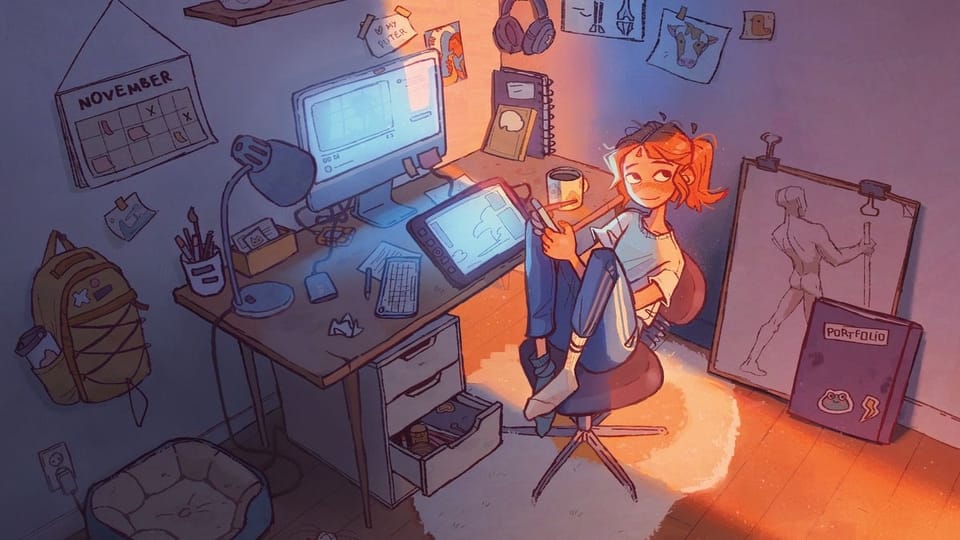
Nobody warned us about this part.
You start making art because you love making art. Then someone buys a piece, you open an Etsy shop, maybe build a website, and suddenly you're a business owner, whether you wanted that job or not. Now instead of painting, you're writing product descriptions, answering emails, updating your shop listings, posting to Instagram, and trying to figure out why your traffic dropped last month.
Sound familiar?
Over on r/artbusiness, this tension comes up constantly. Artists ask: how do you actually protect studio time when the business keeps eating it? And the answers that resonate most aren't about working harder, they're about working differently.
Here's what actually works, drawn from real artists who've figured this out.
First, Let's Name the Real Problem
Running an art business isn't just one job. It's two completely different modes of thinking happening inside one person. Creative work needs flow, openness, and a willingness to follow wherever the work leads. Business work needs focus, task completion, and linear thinking. Switching between them constantly is genuinely exhausting, and most "productivity advice" completely ignores this.
As one artist put it at Artsy Shark: "I chose the time of day when I feel the least creative... so typical workday hours are when I get admin work done." That's not giving up on creativity, it's protecting it by keeping business tasks out of your best hours.
The writer behind The Creative Independent is even more blunt: after building People I've Loved into a real business, she now spends about 5% of her time actually making things. The rest is managing, emailing, organizing. That's not a failure, it's a reality check worth knowing before you scale up.
What Actually Works: Strategies from Working Artists
1. Block your creative time first, treat it like an appointment
If you leave studio time for "whenever I finish the business stuff," it will never happen. Business tasks expand to fill whatever space you give them.
Rebecca Flaherty solved this by restructuring her entire week. She draws in the afternoons, keeps desk days for business, and has one dedicated day just for processing and finishing designs. The structure feels rigid at first, but it's actually what gives her the freedom to create without guilt.
The key insight: your creative time is the product. Protect it the way you'd protect a client deadline.
2. Batch your business tasks, stop context-switching
Every time you stop making art to check email, answer a message, or post to social media, you pay a mental switching cost. Do it enough and the creative work never gets its full share of your brain.
The fix is batching: group all similar tasks and do them together at a set time. Answer all emails at 10am. Post to social media on Monday. Do your bookkeeping on the last Friday of the month. Photograph new work in one session.
3. Pick three tasks a day, and actually do them
A to-do list that never ends isn't a productivity tool. It's an anxiety machine.
Every morning, identify just three things that must happen today: one creative, one or two business. Do those first. Everything else is optional.
4. Stop thinking of the business side as the enemy
A lot of artists experience marketing, admin, and sales as something happening to them, an interruption, a necessary evil. But building a business can be a different form of creativity, a kind of living canvas that is constantly evolving. When sharing your work stops feeling like marketing and starts feeling like being excited to show people what you made, something shifts.
5. Use your low-energy time for admin
Most people have two or three hours where their brain is genuinely sharp, and then longer stretches where they're coasting. Guard the sharp hours for creative work and use the coast time for business.
6. Let some things go
You cannot do everything. Nobody can. Pick two social media platforms instead of six. Respond to email twice a day instead of constantly. Don't enter every show or chase every opportunity. If you've only got 90 minutes a day for your art business in its entirety, that's your constraint, so build around it instead of feeling perpetually behind.
What's your biggest time management challenge as an artist? Drop it in the comments, I'd genuinely like to know what people are wrestling with.

Comments ()